Cool Your Small Room: Top Fan Picks. Black Dust From AC shaft 4 o clock at night
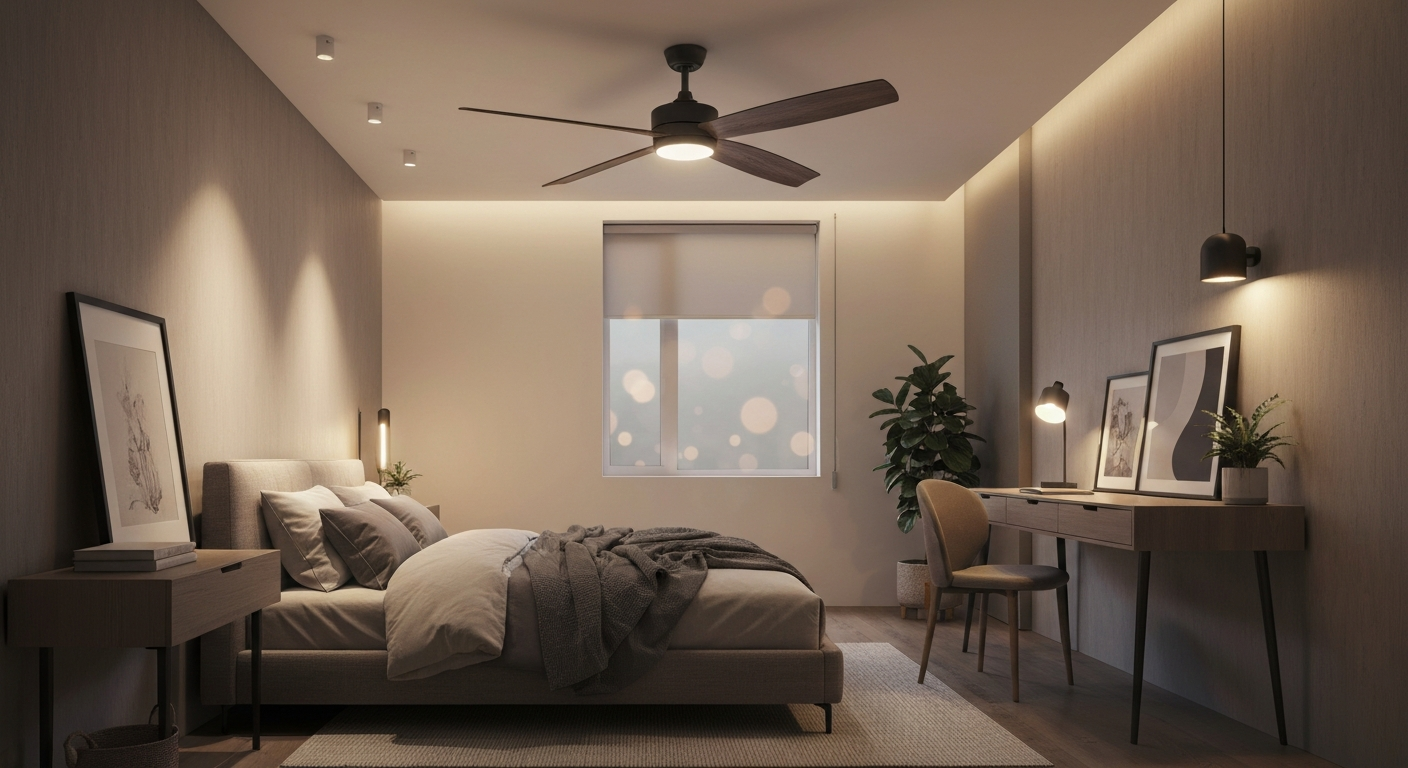
Needing to cool a small room isn't about appliances — it's about reclaiming bodily autonomy in constrained spaces.
When you search for fans to cool a cramped room, you're not just seeking temperature relief. You're signaling something deeper: "My space doesn't meet my basic needs. I have to engineer comfort within boundaries I didn't choose. My body's distress is my responsibility to solve."
This post examines thermal discomfort in small rooms through the lens of environmental coercion and sensory agency. Whether you're navigating inadequate housing, managing sensory overload in shared spaces, or trying to understand why heat feels so personally violating, this guide gives you the framework to distinguish legitimate structural constraints from institutional neglect — plus safe, non-commercial pathways to regulate your nervous system without risking housing stability or financial strain.
ℹ️ Note on Approach: This post does NOT recommend specific products, brands, or affiliate links. Thermal regulation in coercive or constrained environments is a justice issue, not a consumer choice. Resources focus on tenant rights, community support, and no-cost/low-cost strategies accessible regardless of income.
1. Why Heat in Small Spaces Feels Like Entrapment
Beyond Temperature: The Embodied Experience of Spatial Limitation
Thermal discomfort in confined spaces triggers unique psychological harm because it merges physical distress with spatial powerlessness:
- No escape gradient: In larger spaces, you can move toward cooler zones. Small rooms offer no thermal refuge. Discomfort becomes totalizing.
- Autonomy erosion: When climate control is absent or broken, your body's most basic regulatory need depends entirely on external systems (landlord, utility, infrastructure). Dependency breeds helplessness.
- Sensory amplification: Confined spaces intensify all stimuli. Heat compounds with noise, light, and proximity stressors. Nervous system overload accelerates.
- Shame layering: Cultural narratives frame small-space living as personal failure rather than structural constraint. Seeking relief feels like admitting inadequacy.
When Thermal Neglect Becomes Coercive Control
| Institutional Tactic | What It Looks Like | Psychological Function |
|---|---|---|
| Habitability Minimization | "It's not THAT hot," "Open a window," "Others manage fine" | Invalidates bodily knowledge; frames endurance as virtue |
| Cost Shifting | Broken AC ignored; tenants expected to buy portable units | Privatizes systemic failure; penalizes poverty |
| Selective Maintenance | Premium units get HVAC repairs; affordable units get fans | Encodes class hierarchy in thermal experience |
| Retaliatory Framing | Complaints labeled "high maintenance"; lease non-renewal hints | Punishes advocacy; induces silence through housing fear |
| Temporal Gaslighting | "Summer will end soon," "Just wait it out," indefinite repair timelines | Denies present suffering; makes endurance feel temporary when it's chronic |
If you recognize two or more tactics, your frustration isn't oversensitivity. It's accurate perception of environmental coercion. The problem isn't your response — it's the system demanding you accept thermal distress as personal responsibility rather than institutional obligation.
2. Non-Commercial Strategies for Bodily Regulation
Why Product Roundups Fail Coerced Populations
- Financial gatekeeping: "Top picks" assume disposable income. Those most impacted by thermal neglect often lack funds for premium solutions.
- Individualization of structural problems: Consumer framing implies comfort is purchasable, not owed. Shifts blame from landlord/system to individual purchasing power.
- Temporary relief vs. systemic change: Fans treat symptoms, not causes. Habitability violations persist regardless of personal mitigation efforts.
- Data extraction risk: Affiliate sites track vulnerable users. Privacy compromised in pursuit of basic comfort.
Accessible Alternatives That Honor Both Safety and Autonomy
| Need | Consumer "Solution" | Non-Commercial Alternative |
|---|---|---|
| Immediate Cooling | Buy portable AC unit | Cool shower/bath, damp cloth on pulse points, hydration stations at libraries/community centers |
| Airflow Improvement | Purchase high-end fan | Cross-ventilation timing (open windows during coolest hours), request landlord-provided fan as habitability accommodation |
| Sensory Regulation | White noise machine + cooling gadget bundle | Grounding practices (5-4-3-2-1 technique), scheduled time in climate-controlled public spaces, somatic therapy resources |
| Long-Term Relief | Upgrade to better apartment | Tenant union organizing, habitability complaint to housing authority, legal aid consultation on warranty of habitability |
| Community Support | Online forum product recommendations | Mutual aid networks, cooling center directories, neighbor resource-sharing agreements |
3. Building Evidence When Discomfort Is Dismissed
Thermal gaslighting thrives on subjectivity and ephemerality. Systematic documentation bridges the gap between feeling and proof.
The Thermal Distress Log
- Date/Time: Timestamp of peak discomfort + indoor/outdoor temperature readings (free weather app suffices).
- Physical Symptoms: Dizziness, nausea, sleep disruption, cognitive fog — note severity (1-10) and duration.
- Functional Impact: Missed work/school, inability to cook/clean, medical symptom exacerbation.
- Communication Record: All maintenance requests sent/received (save emails, texts, portal screenshots).
- Third-Party Corroboration: Guest observations, neighbor reports, medical provider notes linking symptoms to heat exposure.
Legal Thresholds That Demand Action
- Indoor temp >85°F for >24 hours during heat advisory = habitability violation in most jurisdictions
- AC broken >7 days without remediation timeline = constructive eviction risk
- Health impacts documented by medical provider = urgent priority status
- Multiple units affected = systemic failure requiring regulatory intervention
- Retaliation post-complaint = illegal coercion requiring legal protection
This log serves triple purposes: internal validation ("My body isn't exaggerating"), medical support (heat-related illness documentation), and external leverage (housing authorities, legal aid, tenant unions).
4. Beyond the Fan: Thermal Justice as Social Architecture
Small-room heat isn't isolated. It's one manifestation of how environmental burden distributes along power lines:
- Rental housing: Affordable units lack AC; premium units have climate control. Class determines thermal dignity.
- Urban planning: Redlined neighborhoods have fewer trees, more asphalt. Historical racism encoded in ambient temperature.
- Workplaces: Warehouse/kitchen workers absorb heat; office workers enjoy climate control. Occupational hierarchy felt in sweat.
- Climate crisis: Marginalized communities bear disproportionate heat burden. Adaptation resources distributed inequitably.
Learning to distinguish personal discomfort from structural thermal violence builds critical literacy applicable across all domains. The medium changes; the function persists: making some bodies absorb heat so others can remain comfortable.
Conclusion: Comfort Is a Right, Not a Purchase
Needing to cool a small room can be seasonal inconvenience. It can also be embodied institutional neglect sustained by systemic inequality. The difference lives in acknowledgment, remediation speed, and respect for bodily knowledge.
Spaces that honor your humanity offer thermal dignity as baseline. Spaces that exploit your tenancy offer discomfort wrapped in consumer choice. Naming the difference doesn't just restore comfort — it restores your rightful claim to inhabit your own body without negotiating for biological necessity.
About the author: SEO HOBBY EXPERT researches how environmental conditions function as coercive control in rental housing and urban infrastructure. This analysis combines thermal comfort science with established frameworks in trauma psychology and housing justice advocacy. Last updated: August 2026.
Resources: LIHEAP Assistance: acf.hhs.gov/ocs/liheap | National Tenant Union Directory: tenant.net | Cooling Center Locator: CDC Cooling Centers
Related Reading
- Environmental coercion mirrors interpersonal manipulation — learn to spot 10 warning signs of manipulative behavior before self-doubt takes root.
- Healthy institutions don't require thermal surrender — explore the art of influence without coercion.
- Controlling tendencies encode themselves as infrastructure — see how in Controlling Tendencies Exposed.
- Documenting environmental harm requires clear communication — practice how to protect yourself from institutional neglect.


Comments
Post a Comment