Interview with SEO fuNNky Expert, Senior Housekeeping Trainer — Practical Guide to Cleaning Material and Hotel Room Standards
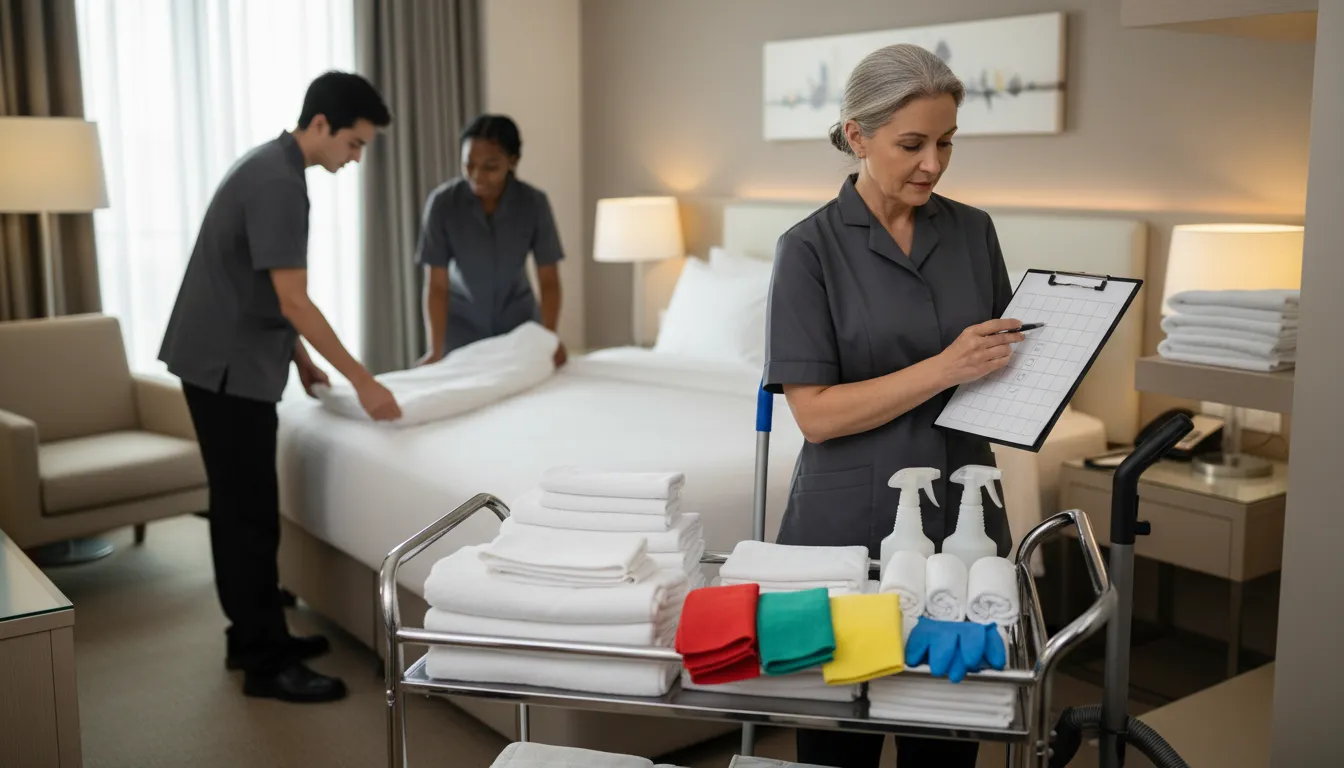
The interview-style guide below shows how top housekeeping teams pick, handle, and use cleaning items, guest-room supplies, and important registers. This helps make sure the hotel keeps the same standards every day. If you manage a housekeeping team, watch over hotel work, or are learning to work in a hotel, this Q&A gives you simple steps, checklists, safety tips, and also the main mistakes you should avoid.
Table of Contents
What this guide covers
Essential types of cleaning tools and other supplies
Standard steps to clean a guest room, with timing and checks
How the housekeeping desk keeps track of room status, logs, and talks to others
Safe ways to store, mix, and wear PPE when handling chemicals and cleaning supplies
Cleaning by color, better ways to care for the planet, and mistakes many people make
Simple lists to use each day, to check stock, and to review work
Interview
Can you briefly explain why careful selection of cleaning material matters in a hotel?
Choosing the right cleaning product is at the heart of good housekeeping. The things you use to clean help your space stay nice for your guests. They also help surfaces and fabrics last longer. When you use the correct cleaning products, you spend less money on fixing things or buying new ones. There is also less time with rooms being closed for cleaning. Good cleaning products keep your staff healthy and help your brand stay trusted. In simple words, what cleaning product you use changes the way guests feel, how well things run, safety for everyone, and how you take care of the planet, all at the same time.
What are the core categories of cleaning material every hotel should stock?
Sorting cleaning items into groups makes it easier to buy what you need and to train your team. You can use this kind of sorting for keeping track of stock, where to put things, and talking to staff about their work.
Surface and floor cleaners — these are simple all-purpose cleaners, degreasers, and special cleaners for wood or stone
Sanitizers and disinfectants — strong disinfectants used for surfaces people touch often and in the washrooms
Washroom chemicals — toilet cleaners, scale removers, and items to keep drains clear
Glass and mirror cleaners — solutions that clean mirrors, glass walls, and windows without leaving marks
Air-care and deodorizing agents — powerful air fresheners or items that get rid of bad smells after cleaning
Laundry chemicals — soaps, softeners, items for stains, and things that keep linen and uniforms in good shape
Tools and consumables — cloths made of microfibre, mop heads, brushes, vacuums, dusters, garbage bags, and things you use only one time
Personal protective equipment (PPE) — gloves, masks, eye covers, and apron or overalls to stay safe with chemicals
Guest-room amenities and loan articles — slippers, sewing kits, shaving kits, dental kits, extra pillows, and items for the mini-bar
How should a housekeeping team structure a daily room-cleaning workflow using proper cleaning material?
A steady way to work helps you not skip steps and keeps guests happy. Here is a simple five-step way to clean a room. There are notes about what to use for cleaning at each step.
Get Things Ready (5 minutes)
Bring the trolley with things like fresh sheets, towels, guest items, minibar goods, and the right cleaning stuff for the room type.
Look at the housekeeping board or system to see the room status. Notice if there are any VIP notes or if the “Do Not Disturb” sign is on.
Clear Things Out and Let in Air (3–5 minutes)
Open windows or curtains if you can, to let fresh air in. You can use air-care products after this step.
Take out all trash, dirty linens, and used minibar goods. Put them in the right bags to stop mix-ups.
Dry Clean and Dust (7–10 minutes)
Clean with microfiber dusters and color-coded cloths for different places. Start high and go down to catch more dust.
Do not use wet cleaning stuff on electronics or shiny wood. Use products the maker says are safe.
Wet Clean and Clean All Over (10–15 minutes)
Use the cleaning stuff that fits: surface cleaner for tables, glass cleaner for mirrors, and bathroom cleaner for toilets and showers. Wipe spots people touch often, like remotes and switches.
Follow mixing directions and leave the cleaner on for the right amount of time. For example, most cleaners for germs need to stay for 60–120 seconds. If a spot is
Timing above is just a guide. Jobs with luxury standards or deep cleaning will need more time and must use specific cleaning products.
Which cleaning material are best left as concentrated stock, and how should dilution be handled?
Many professional chemicals come in strong solutions to help lower shipping costs and cut down on extra packaging. You should keep your cleaning supplies locked up and safe. Make what you need at one place or use mixing systems right where you work. Key practices:
Store concentrated containers upright. Make sure they are labeled. Keep them away from heat or direct sunlight.
Use pre-calibrated dilution pumps or measuring devices. This helps avoid making the mix too strong or too weak.
Put dilution charts close to mixing areas and on trolleys. This gives people a quick way to check.
Train staff to never mix chemicals unless told to. Some combinations can make toxic gases.
How should cleaning material and chemicals be stored and secured?
Safe storage helps stop accidents and keeps products working well. Please follow these rules:
Store concentrated chemicals, ready-to-use solutions, and other items in different places.
Keep cleaning supplies in locked cupboards. Make sure they have easy-to-read labels and safety signs.
Keep Safety Data Sheets (SDS) for every chemical, either in a digital file or a printed copy, so people can get to them.
Put trays under bottles and containers to catch spills. Keep spill kits close by where you store chemicals.
Put first-aid steps and emergency contact numbers near areas where chemicals are kept.
What does a color-coded cleaning system look like, and why is it important?
Color-coding helps cut down on cross-contamination. It does this by using things like cloths, mop heads, and brushes only in certain places. A common way to do this is:
Red — toilet and other places in the washroom that can have more germs
Blue — general low-risk spots like mirrors and glass (or sometimes just glass)
Green — food areas or minibar spaces
Yellow — clinical zones or places where it is important to be extra careful
Black or brown — heavy-duty cleaning or outside surfaces
Set colors for your property, but use the same color system in all parts and write it down in the staff manual and where you keep cleaning items.
What are the most common mistakes teams make when using cleaning material?
Avoid these frequent errors:
Using strong chemicals without adding water can damage surfaces. It can also hurt staff.
Mixing products that should not be together (like bleach and ammonia) can make dangerous fumes.
Not waiting enough time after putting cleaning product on. If you do not let it stay wet for the right time, it will not work well.
Using items meant for one use again, or using the same cloth in both the washroom and bedroom.
Having too little or too much cleaning items because the inventory is not tracked well. This leads to buying things in a rush, or ending up with old supplies.
How does the housekeeping desk coordinate room status and guest requests with the right cleaning material?
The housekeeping desk is where all the work for room status, team members, and talking to guests happens. The main tools and lists it has been:
Room status board or software — shows if a room is occupied, empty, clean, dirty, not working, or not in use, so staff can see what cleaning items to bring. For example, they might need extra towels or special cleaning for a room that had smokers.
Guest call register — keeps a list of calls the housekeeping team gets, what guests want, who answers, when it was answered, and if it got done. This helps make sure the right items get to guests and are charged when needed.
Occupancy reports — shows the real number of people in the rooms and checks it against what the front office has. This is done so towels and minibar items can be given out as needed.
Lost and found register — keeps a record of things that turn up during cleaning and notes how they were stored. This helps to stop problems and makes it easy for people to get their things back.
Key register — keeps track of who gets floor master keys and when they give them back. It also makes sure it is safe when staff go into rooms.
Minibar and laundry registers — keep count of charges and if things were restocked. This links the cleaning supplies used with what guests are charged.
What standard operating checks should be recorded at the housekeeping desk each shift?
Keep a short and clear shift checklist at the desk. Write down these things:
The number of people who will come or leave
VIP guests or rooms that need to be set up in a special way
Rooms that need fixing or a strong cleaning
Not enough important cleaning items
Who will work and if anyone needs to stay late
Guest requests that are still open and what's going on with them
What does a practical cleaning material inventory checklist look like for a 50-room property?
Below is a small list of items to start with. The number you need will depend on how many people stay, how often you clean, and how fast laundry gets done.
Concentrated chemicals — all-purpose cleaner (10 L), cleaner for germs (10 L), toilet bowl cleaner (5 L), glass cleaner (5 L)
PPE — disposable nitrile gloves (2,000), masks (1,000), aprons (200)
Consumables — garbage bags (5,000), paper towels (10 cases), toilet rolls (20 cases)
Tools — 5 cleaners for floors, 10 mop handles and heads, 50 microfibre cloths for each color, 10 trolleys
Linen — 3 sets of bed linen for each room (150 sets), towels 4 for each room (200), mattress protectors 1 for every bed and extra ones
Guest amenities — soap, shampoo, lotion, shower caps, sewing kits, dental kits, slippers — stock should last for 7 to 10 days
How should a hotel manage minibar and guest amenities' replenishment in relation to cleaning material use?
The minibar and things like soap and towels are a part of the housekeeping work. It is good to follow some tips:
Use a room refreshment form on the trolley to write down what items people have used during each visit. This connects with POS billing and helps you know what things to restock.
Pick a staff member for each shift to check minibar counts against the room charge sheet when people check out.
Keep extra item sets and big bottles of toiletries in locked storage rooms. Only give them out through the housekeeping desk.
Restock after cleaning to stop fresh items from touching dirty places.
What PPE and training are essential for safe handling of cleaning material?
Staff safety is non-negotiable. Provide:
Basic PPE kit includes gloves, masks, eye covers, and shoes that do not slip.
Training for safe use of chemicals teaches how to read SDS, mix, use right amount, and handle spills.
Staff see how to lift and handle things safely so they hurt their bodies less when moving linen and carts.
Clear steps are written down. Staff also get checked now and then so they remember what they know about cleaning things and safety controls.
How can hotels reduce environmental impact without compromising standards when selecting cleaning material?
You can reach sustainability if you make careful choices and use good practices.
Pick products that are more concentrated and use refill systems to lower single-use plastic.
Go for cleaning products that break down easily and do not have phosphate. Check that they are certified by known eco-labels.
Set up towel and linen reuse policies. Let guests know about these so you can do less laundry and cut down on chemical use.
Make sure you use the right amount of cleaning products and not too much. Use equipment that saves water when you can.
Think about using microfiber instead of wipes you throw away. It helps cut waste over time. Make sure to wash microfibers the right way to keep microplastics where they should be.
What audit and quality checks should be performed to ensure cleaning material is used correctly?
Introduce a multi-layer audit regime:
Daily spot-checks — supervisors look at some rooms in each shift using a checklist that checks if people use cleaning material the right way and put out the right amenities.
Weekly deep audits — check how much stock there is, how people mix supplies, and if people wear all PPE as needed.
Monthly supplier review — look at how cleaning material works, their cost, if there are any safety updates, and any updates on being eco-friendly.
Guest feedback tracking — link guest complaints about bad odors, stains, or missing things in the room to problems with cleaning material or if any step in the process was skipped.
What should a housekeeping training program include regarding cleaning material?
Training must be practical and repeatable:
A look at the different types of cleaning items that are used in the classroom and how to read SDS.
Practice times to learn how to make beds the right way, clean bathrooms, take out stains, and mix cleaning items the right way.
Watching and checking new workers as they clean, so they learn the right way while someone watches, until they clean fast and well enough.
Review classes every 6 to 12 months and quick updates when new cleaning items are brought in.
How should lose and found items found during cleaning be handled?
Set up a clear lost-and-found process that you can check later. This will help keep the privacy of your guests safe. It will also help you stay away from getting in trouble if something goes wrong.
Write down found items right away in the lost-and-found book. Add the room number, date, time, what the item is, and staff initials.
Put the items in a safe place. If you find something valuable like jewelry or cash, take it to a safe or let the front office keep it, and give a receipt.
Follow the property's rules for unclaimed items and write down what happens to them in the end.
What are the legal and compliance considerations related to cleaning material?
Key compliance points to track:
Health and safety rules ask for SDS, staff training, and PPE.
Local rules are about how to store chemicals, how to let out wash water from laundry, and how to throw away dangerous waste.
Food-safety rules matter if cleaning material are used where food is made in the back of the house.
For properties moving from ad hoc cleaning supply purchases to a standardized program, what is the recommended rollout plan?
Use a phased approach to limit disruption:
Audit current supplies — make a list of all the cleaning material and tools that are there now, look at SDS, and find what is missing.
Define brand standards — choose the product types, think about sustainability goals, and decide on which suppliers to use.
Pilot — try out new cleaning material and dilution systems in a small group of rooms or floors, then see how they work.
Train and document — give training to all staff and update the SOPs and checklists.
Full implementation — start using central ordering, set par levels, and begin doing audits.
Review — look at KPI trends and guest feedback after 30, 60, and 90 days and change the process if needed.
What are the most useful KPIs for measuring housekeeping performance connected to cleaning material usage?
Track key numbers that show quality, how well things work, and cost:
Percentage of rooms checked and passed in each shift
Average cleaning time in each room based on room type
Guest complaints about cleaning for every 1,000 room nights
Amount of cleaning products used in each room that is in use (in litres or units)
Laundry return time and how often linen is swapped
Cleaning product cost for each room that is used
Can you share a concise daily trolley checklist that assures all required cleaning material are on hand?
Use this trolley checklist every time before you start your shift. This is a standard practice for all.
Fresh linen sets for the room
Clean towels and bath mats
Guest items: soap, shampoo, lotion, shower caps, dental, and shaving kits
Microfibre cloths sorted by color
Pre-mixed small bottles or dosing heads for surface cleaner
Glass cleaner in a spray bottle
Toilet-bowl cleaner in a small bottle and a brush
Garbage bags and extra bin liners
Spare batteries for remote controls and room appliances
PPE like gloves, masks, and safety glasses
Which cleaning material deliver the best value for both performance and cost in busy properties?
Value means how well something works, how safe it is, and how long it lasts. Here are some things to think about:
Concentrated chemistries with the right dosing cost less overtime than ready-to-use bottles.
Microfiber cloths and mop systems cost more at first. But they help cut down the use of the and other chemicals.
Cleaners for many surfaces that are pH balanced help stop surface damage. So, you may not have to replace things as much.
Brand vs. trade products: well-known hospitality brands often offer the support you need and add on dilution tools. This helps you to keep waste and mistakes down.
How should you handle guest requests for extra amenities or the removal of items (for example, mini-bar removal)?
You should write down what the guest likes and do it fast.
Update the room notes in property management software so the cleaning supplies and stock are up-to-date for that room when people visit again.
If a guest asks for the mini-bar to be removed—write down who asked and the time; take out items and note changes at the desk, so there are no billing mistakes.
Any requests that cost, like extra beds or extra items, should be written down on the extra-bed or extra-item report. This will help front-office billing.
What emergency procedures relate to cleaning material (spills, exposure, incorrect mixing)?
Prepare for incidents before they occur:
Put clear steps for cleaning up spills. Keep spill kits next to where you store chemicals.
If skin or eyes touch chemicals, follow the SDS first-aid steps. Get medical help if you need it.
If you ever mix chemicals that do not go together, get everyone out, get fresh air into the room, and call emergency help if the SDS says to do so.
Report every incident. Write it down to find and use better ways for safety later.
Common misconceptions and edge cases
Myth: “Stronger concentration equals better cleaning.”
If you use too much, it can hurt fabrics and surfaces. It can also leave harmful stuff behind and be bad for people working there. Mixing it the right way helps you clean well and keeps things safe.
Myth: “All microfiber cloths are the same.”
The way a microfiber cloth is made matters. The weave, GSM, and how strong it is will change how well it works. Pick cloths that are made for the job you need. Change them for new ones when the time comes.
Edge case: Handling rooms vacated after a long-term stay or with heavy soiling
Heavy-soil or long-stay rooms need a deep clean process. Cleaners need to let the cleaning solution sit for a longer time. Some tough stains may need to be treated before regular cleaning starts. The carpet and mattress should be cleaned. After that, there has to be a check of the room before it is put back into use. Make sure to get more cleaning supplies for these deep cleans.
Quick-reference checklists
Essential cleaning material procurement checklist
List of approved chemical products with SDS attached
Supplier contact and lead times
Replacement cycle and reorder points for each cleaning product
Calibration schedule for dilution equipment
PPE stock levels and issuance records
Pre-shift housekeeping desk checklist
Check room status and note any special needs
Make sure there are enough cleaning items on trolleys
Go over VIP and VIP-room setup steps
Give rooms and let attendants know what they will clean
Write down any repairs or deep clean jobs that need to be done
FAQs
What is the minimum set of cleaning material for a small boutique hotel?
At minimum, you need an all-purpose cleaner that is not tough on things, something to kill germs, a toilet bowl cleaner, and a glass cleaner. Use microfibre cloths in different colors. You also will want a mop and bucket, or you can use a microfiber mop system. A machine to clean carpet is important too. Get PPE, and a basic set of guest items. It is good to start with cleaners that you mix with water and the tools to help you use the right amount. This can help with cost.
How often should be cleaning material be audited for expiry or effectiveness?
Check the chemical stock every month. Do a formal review every three months. Change products that are getting close to expiry. Try new batches on places people do not usually see to see if they work well.
Can the same cleaning material be used across all room surfaces?
No. Some surfaces, like natural stone, wood, and leather, need pH-specific or other special products. Use cleaning products that are approved by the maker for these delicate finishes. Always test them in a hidden spot first.
What is the best practice for handling guest allergies related to cleaning material scents?
Write down allergies and scent problems on the guest’s file. For these rooms, use only unscented or fragrance-free cleaning items and air-care products. Mark the room, so next time the guest comes, you will know.
Are eco-friendly cleaning material less effective?
Many modern eco-labelled cleaning products can work as well as, or even better than, regular ones. This happens when you use the right mix and the proper tools. You should check these products in small tests first. This will help you see how they perform with your KPIs.
How do you reduce cleaning material waste while maintaining hygiene standards?
Use concentrated products with dosing systems. Use microfibre systems that need less chemical. Train staff on the right dosing and how to use it. Start linen reuse programs where it is a good fit.
What cleaning material should not be mixed under any circumstances?
Never mix bleach with ammonia or cleaners that have strong acids, like toilet bowl cleaners made with acid. Mixing them can make gases that are very harmful. Always look at the SDS before you mix or use other products.
How should lose and found items be recorded when found during cleaning?
Add the item to the lost-and-found list. Write down the date, time, room number, staff initials, and where it will be kept safe. If it is a valuable thing, take it to secure storage and make a receipt when you do.
Summary and practical next steps
Good hotel cleaning needs the right choices, safe storage, and proper use of cleaning items. It also needs clear steps at the housekeeping desk. To do this now:
Do a two-day check of all cleaning products and stock you have now.
Make or update mix charts and put them at spots where things are mixed and on trolleys.
Use color-coded microfiber kits and make a trolley list for each shift.
Set a time for staff training again, with focus on PPE, SDS, and how to use cleaning products right.
Start keeping track of one KPI—how many guests complain about cleanliness each month—and look at the trend after three months.
By using these steps, you can cut down on mistakes, keep staff and guests safe, and give a good and steady guest experience. This is possible when you use the right cleaning items and stick to careful housekeeping routines.
Travel and guest transit resources
Hotels often help with guest arrivals, suggest ways to get around the city, and also help workers get to and from work. To do a good job, it can help to use real travel and traffic tips. If you need to know about the weather, see Travel tips. For wider info about traffic, look at Traffic management.
Get to know how AI can guide your route with Predictive travel. For local traffic news, visit Stay informed.
For background detail on guest safety and travel planning, check regional risk stories like Deadliest roads and posts about Overtourism. If your hotel or house tells guests about local ways to get around, add short tips or links about Scooter driving safety. You can also share advice about how GPS prediction may change travel times.


Comments
Post a Comment